A Food Worker Develops a Headache What Is the Required to Do
Safe Food Handling
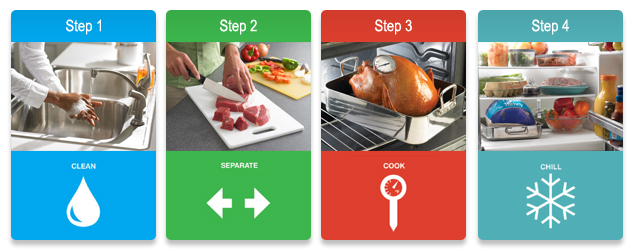
Print & Share (PDF: 377KB) Castilian (Español)
The food supply in the Usa is among the safest in the world. However, when certain disease-causing bacteria or pathogens contaminate nutrient, they tin can cause foodborne illness, often chosen "food poisoning." The Federal government estimates that there are well-nigh 48 one thousand thousand cases of foodborne affliction annually – the equivalent of sickening 1 in 6 Americans each year. And each year, these illnesses effect in an estimated 128,000 hospitalizations and 3,000 deaths.
Know the Symptoms
Consuming dangerous foodborne bacteria will usually crusade affliction within one to 3 days of eating the contaminated food. Nevertheless, sickness can besides occur within xx minutes or upward to 6 weeks after. Symptoms of foodborne illness can include: airsickness, diarrhea, and intestinal hurting – and flu-like symptoms, such as fever, headache, and trunk ache.
Handle Foods Safely
Although well-nigh healthy people will recover from a foodborne disease within a curt period of fourth dimension, some can develop chronic, severe, or even life-threatening health problems. In addition, some people are at a college chance for developing foodborne affliction, including pregnant women, young children, older adults, and people with weakened immune systems (such as transplant patients and individuals with HIV/AIDS, cancer, or diabetes). To keep your family safer from food poisoning, follow these iv unproblematic steps: make clean, dissever, cook, and chill.
Clean
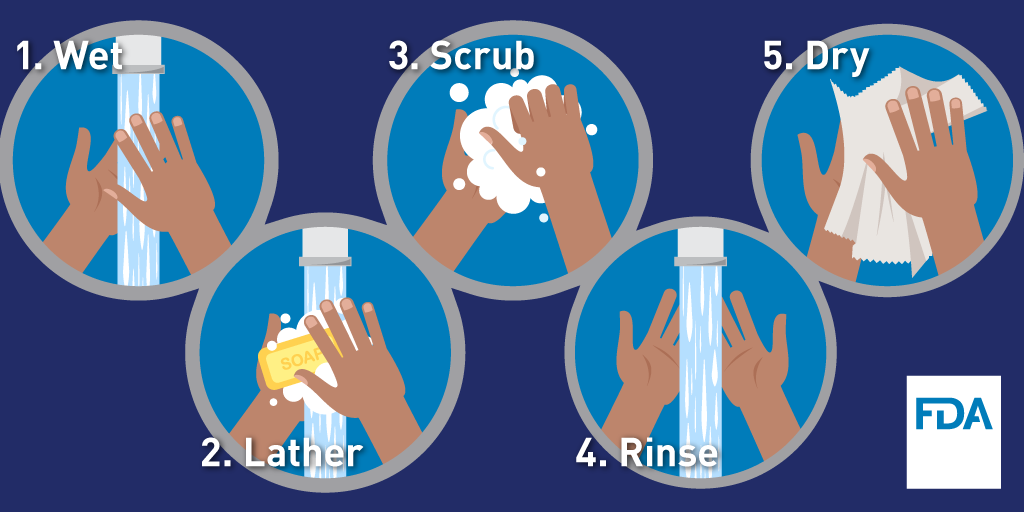
Launder hands and surfaces oftentimes
- Wash your hands with warm water and soap for at least 20 seconds before and after handling food and after using the bathroom, irresolute diapers, and handling pets.
- Wash your cutting boards, dishes, utensils, and counter tops with hot soapy water after preparing each nutrient item.
- Consider using paper towels to make clean up kitchen surfaces. If y'all utilize cloth towels, launder them often in the hot bike.
- Rinse fresh fruits and vegetables under running tap water, including those with skins and rinds that are not eaten. Scrub business firm produce with a clean produce brush.
- With canned appurtenances, remember to make clean lids before opening.
SEPARATE
Divide raw meats from other foods
- Separate raw meat, poultry, seafood, and eggs from other foods in your grocery shopping cart, grocery bags, and refrigerator.
- Use 1 cutting board for fresh produce and a separate one for raw meat, poultry, and seafood.
- Never identify cooked nutrient on a plate that previously held raw meat, poultry, seafood, or eggs unless the plate has been washed in hot, soapy water.
- Don't reuse marinades used on raw foods unless you bring them to a boil first.
Melt
Melt to the right temperature
- Color and texture are unreliable indicators of prophylactic. Using a food thermometer is the but way to ensure the safety of meat, poultry, seafood, and egg products for all cooking methods. These foods must be cooked to a safe minimum internal temperature to destroy any harmful leaner.
- Melt eggs until the yolk and white are house. Only use recipes in which eggs are cooked or heated thoroughly.
- When cooking in a microwave oven, cover nutrient, stir, and rotate for even cooking. If there is no turntable, rotate the dish past mitt once or twice during cooking. Ever let standing time, which completes the cooking, before checking the internal temperature with a nutrient thermometer.
- Bring sauces, soups and gravy to a boil when reheating.
Arctic
Refrigerate foods promptly
- Use an appliance thermometer to exist certain the temperature is consistently 40° F or below and the freezer temperature is 0° F or below.
- Refrigerate or freeze meat, poultry, eggs, seafood, and other perishables inside 2 hours of cooking or purchasing. Refrigerate within 1 60 minutes if the temperature outside is above 90° F.
- Never thaw food at room temperature, such as on the counter top. In that location are three safe means to defrost food: in the refrigerator, in cold water, and in the microwave. Food thawed in cold water or in the microwave should be cooked immediately.
- Always marinate food in the refrigerator.
- Divide large amounts of leftovers into shallow containers for quicker cooling in the refrigerator.
Safe Minimum Internal Temperatures
| Nutrient Type | Internal temperature |
|---|---|
| Beefiness, Pork, Veal, and Lamb (chops, roasts, steaks) | 145oF with a three minute residue time |
| Ground Meat | 160oF |
| Ham, uncooked (fresh or smoked) | 145oF with a 3 infinitesimal residue fourth dimension |
| Ham, fully cooked (to reheat) | 140oF |
| Poultry (ground, parts, whole, and stuffing) | 165oF |
| Eggs | Cook until yolk & white are firm |
| Egg Dishes | 160oF |
| Fin Fish | 145oF or flesh is opaque & separates hands with fork |
| Shrimp, Lobster, and Venereal | Flesh pearly & opaque |
| Clams, Oysters, and Mussels | Shells open during cooking |
| Scallops | Flesh is milky white or opaque and firm |
| Leftovers and Casseroles | 165oF |
Prophylactic Cooking Temperatures (PDF: 718KB)
Report a Problem
If you lot think that you or a family unit member has a foodborne affliction, contact your healthcare provider immediately. Besides, report the suspected foodborne illness to FDA in either of these ways:
- Contact the Consumer Complaint Coordinator in your area.
- Contact MedWatch, FDA's Safety Information and Adverse Event Reporting Program:
By Phone: 1-800-FDA-1088
Online: File a voluntary report at http://www.fda.gov/medwatch
Source: https://www.fda.gov/food/buy-store-serve-safe-food/safe-food-handling
0 Response to "A Food Worker Develops a Headache What Is the Required to Do"
Post a Comment